Market Entry
Costing a Sri Lanka Factory: Energy, Logistics, Labour and FX
Building a factory cost model for Sri Lanka is an exercise in aligning definitions: whether power is billed per unit or per maximum demand, whether freight is quoted to the factory gate, whether wages include statutory contributions, and which day's exchange rate you use. Once the basis matches, run three output scenarios and keep rupee spending separate from dollar spending.
You are probably doing two things at once: collecting quotes from local suppliers and being asked by head office to fill in a “unit production cost” template. The trouble is that local quotes rarely share a basis. One supplier quotes electricity per kWh, another by maximum demand. One freight quote stops at the port, another runs to your gate. One salary figure is basic pay, another includes statutory contributions. If the basis differs, a tidy spreadsheet is still unusable.
Why three layers beat hunting for one average
Layer one is the basis of charge: how each item is billed, whether there are one-off fees, and which components float with external prices. Layer two is the operating scenario: one shift and two shifts produce different unit costs, and fixed costs are absorbed very differently in a ramp-up year than at full capacity. Layer three is currency: which costs are in dollars, which in rupees, and when they fall due. Put all three on the table and head office can tell whether your numbers were calculated or guessed.
Myth 1: Is your industrial power bill just tariff × kWh?
What many people assume: take the price per unit, multiply by annual consumption, and the electricity cost is settled.
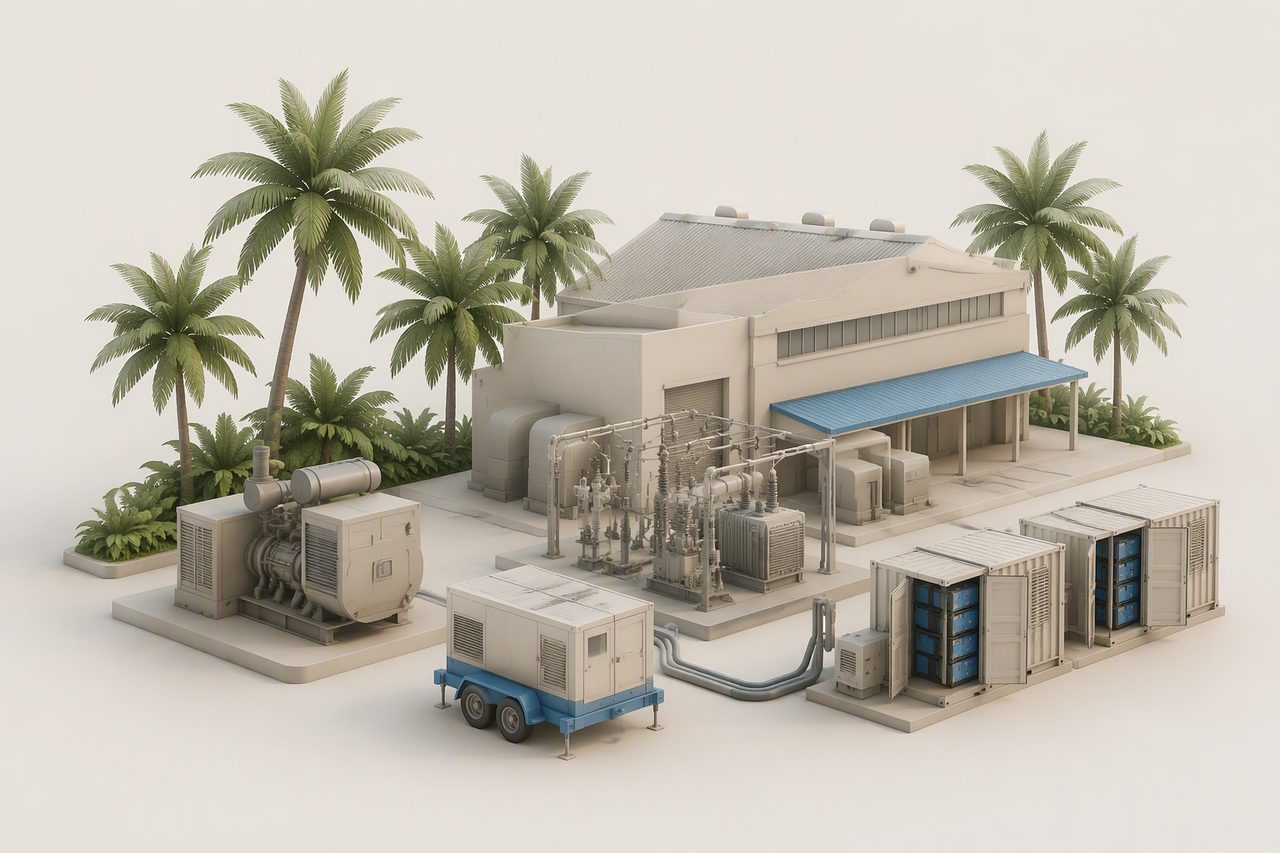
What actually happens: industrial billing usually has more than an energy component. It may include a charge based on maximum demand or contracted capacity, time-of-day bands, and an adjustment factor that moves with fuel prices. More importantly, what a factory is really buying is reliable power, not a tariff — on-site generation, a second incoming feeder or storage all belong in this cost line. Different zones and different power suppliers may quote on different bases; some quote electricity only and leave connection and capacity upgrades to a separate negotiation.
What the mistake costs you: unit costs built on an average tariff come out too low, and cash gets tight in high-load months. Fuel and maintenance for on-site generation stay outside the model until the first long outage, when you discover that spending is not discretionary. To get comparable figures, ask the supplier or your industrial zone for the current industrial tariff schedule, and ask who pays for transformer capacity, dedicated-line connection and outage contingency. The supplier's published basis for the current period governs.
Myth 2: Is logistics just sea freight plus inland trucking?
What many people assume: add ocean freight, terminal handling and trucking, and logistics is covered.
What actually happens: what lands in your factory cost also includes import duties and taxes, customs broker fees, port storage and demurrage risk, transport permits for out-of-gauge or special cargo, on-site handling equipment, and the safety stock you carry because sailing schedules move. A site further from the port may not cost much more per trip, but the annual total of transport, tied-up inventory and emergency shipments adds up. The duty rate that applies to your import depends on tariff classification, which your broker should confirm by HS code before shipment, under the rules Sri Lanka Customs publishes (https://www.customs.gov.lk/).
What the mistake costs you: one “freight” line in the model leaves demurrage, permits and safety stock with nowhere to sit, and the landed cost comes in above budget. For export-oriented projects, poor port choice or unreliable schedules can also put delivery dates at risk.
Myth 3: Is labour cost just total payroll?
What many people assume: headcount × monthly salary × 12 is the people budget.
What actually happens: wages are only part of the cash outflow. Statutory contributions, overtime and holiday pay, staff transport, meals, uniforms and safety training, dormitory or commuting allowances, and work permits and visas for expatriate staff all stack on top. Skilled trades are not easy to recruit in every region, and a longer hiring cycle means more training spend and a slower ramp-up — costs that rarely show up in the payroll table but do show up in the P&L. Contribution heads and rates should follow the latest rules published by EPF (https://epf.lk/) and the Department of Labour (https://labourdept.gov.lk/), and be computed by a licensed local professional.
What the mistake costs you: a people budget built from the payroll sheet usually lands below actual cash spend. Trim transport and meals to protect the budget and you may find you cannot fill the roster at all, leaving shifts short.
Myth 4: Does changing one exchange rate mean you have handled FX?
What many people assume: put one rate in the model, nudge it once a year, and currency risk is dealt with.
What actually happens: the problem is currency mismatch, not a number. Equipment, raw materials and critical spares are usually priced in dollars, while local sales bring in rupees and wages, utilities and rent go out in rupees. Once collection cycles and payment cycles diverge, currency moves eat straight into gross margin. Which hedging instruments are available, at what tenor and at what cost, depends on what your bank offers and should be confirmed transaction by transaction with your account bank; FX arrangements follow the latest rules published by the Central Bank of Sri Lanka (https://www.cbsl.gov.lk/). Freezing future years at today's rate is the same as assuming currency risk does not exist.
What the mistake costs you: the model looks good at approval stage, then the FX impact lands in finance costs with nobody owning it — or no buffer was set aside, and rupee weakness leaves working capital short.
Too many quotes, no shared basis — how do you tell which one is usable?
Quotes from different local suppliers for the same scope often cannot be compared directly. Look at four things:
- Is it itemised? Labour, materials and equipment, third-party disbursements and government fees shown separately. A single lump sum usually grows later.
- Are the assumptions written down? Output, shifts, site, voltage level, exchange-rate reference date, validity period. Different assumptions make prices incomparable.
- Are fixed and floating items separated? Advisory work and permit applications are typically fixed; freight, fuel and anything indexed to power tariffs typically float, and need a stated adjustment mechanism.
- Does it say what is excluded? That column usually tells you more than the “included” list.
Ask two or three suppliers to quote against the same basis note, or you will be comparing bases rather than prices. If the project goes down the BOI route, eligibility, incentives and procedures follow the latest policy BOI publishes (https://investsrilanka.com/); whether it applies to you is a judgement a licensed professional makes against your actual business activities, and no third party can guarantee the outcome.
Project approval self-check table
| Cost line | Data to obtain | Who to confirm with | How to treat it in the model |
|---|---|---|---|
| Power | Industrial tariff schedule, maximum demand, connection and capacity upgrade fees | Power supplier or industrial zone | Split energy charge from capacity/demand charge; run at two output levels |
| On-site generation or storage | Fuel consumption, maintenance intervals, equipment capex | Equipment suppliers and engineering advisers | Keep as a separate cost line, not blended into electricity |
| Import duties and taxes | Tariff classification, applicable rates, whether incentives apply | Customs broker and Sri Lanka Customs | List by classification, with assumptions stated |
| Inland transport | Port-to-site distance, road conditions, vehicle type, out-of-gauge permits | Transporters and customs broker | Model on annual volume, not per-trip rate alone |
| Port and storage | Handling fees, storage charges, demurrage rates, schedule reliability | Freight forwarders and port parties | Set aside a separate demurrage risk provision |
| Labour | Headcount, shifts, statutory contributions, overtime, transport and meals | EPF, Department of Labour, local recruiters | Two lines: base wages and add-on costs |
| Expatriate staff | Roles, numbers, permit and visa arrangements | Immigration authorities and licensed professionals | Permits, travel and relocation as separate items |
| Exchange rate | Currencies in and out, collection cycle, payment timing | Your account bank and Central Bank published rules | Three rate scenarios; FX impact on its own line |
This content is general information only and is not legal, tax or immigration advice. Specific requirements are governed by the latest positions of the relevant Sri Lankan authorities and the licensed professional you appoint.
FAQ
- What exchange rate assumption should I use in a factory approval model?
- Avoid a single point rate. Set three scenarios — base, adverse and severely adverse — and show the effect of currency moves on gross margin on its own line, so head office can see the exposure. Whether forward cover or another hedge is available, at what tenor and at what cost, is something to confirm transaction by transaction with your Sri Lankan account bank; the latest FX requirements are those published by the Central Bank of Sri Lanka.
- Where do I get industrial power quotes, and how do I compare them?
- Ask the power supplier or your industrial zone for the current industrial tariff schedule, and require the billing components to be stated: energy charge, capacity or demand charge, time-of-day bands, the fuel-linked adjustment, and one-off connection and capacity upgrade fees. If the plan includes on-site generation or storage, list fuel, maintenance and replacement cycles separately instead of spreading them into the electricity line.
- What should I budget for beyond wages in a labour plan?
- At minimum: statutory contributions, overtime and holiday pay, staff transport and meals, uniforms and safety training, recruitment and training lead time, and permit and visa related costs for expatriate staff. Contribution heads and rates follow the latest rules of EPF and the Department of Labour and should be calculated by a licensed local professional. For hiring difficulty and attrition, ask local recruiters for figures on your specific job types rather than applying an industry average.
- How long does this costing exercise take, and what does it cost?
- It depends on whether the site is fixed, whether the power and logistics options are settled, and whether the output assumptions are clear. The usual approach breaks into three stages: data collection, assumption sign-off, and sensitivity analysis. You can ask local accountants, engineering advisers and customs brokers for itemised quotes, and those quotes should separate fixed fees, third-party disbursements and government fees. Timelines and total cost depend on your project scope, and no third party can guarantee the outcome.
Related reading


Need this applied to your case?
Tell us your team size, industry and timeline — we will map the actual path for your project.
Contact us